


30 Ways to Boost Learning
This is your resource – a mini-library of important and powerful learning terms and learning strategies. Each is explained clearly with references to other resources for more information. Get familiar with each and have conversations with your kids about how to use them. Incorporate them into your instruction. Help your child to use them with independent study – you will find their learning maturity improves rapidly.
Your goal should be, over time, to incorporate many of them into comfortable and frequently used study habits. For example, if you aren’t familiar with these and implement and practice just one new strategy per week, you will achieve a gigantic leap in learning ability in about six months!
How many do you already know? Which ones do you want to discuss and try right away?
Take a look at these powerful ideas, talk about them, and try them!
Click here to download all terms.
 Why you need it: Science has shown that the brain learns best when we operate at the edge of our abilities, just outside our comfort zones, where we make mistakes to uncover what we don’t know.
 Why you need it: If you want to gain skills rapidly or approach expert-level status at anything, you must understand the importance of deliberate practice.
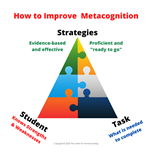 Why you need this: Knowledge acquisition is supercharged by a skill called metacognition. The aware learner adapts strategies that not only help her input the information now but enable her to retrieve it later.
 Why you need this: The brain easily fatigues when studying without breaks and quickly reaches diminishing returns, which often go undetected by the learner. Shorter and more intense study sessions have been found to promote better learning.
 Why you need it: It’s a fact that most students don’t know how to take good notes. Effective notes, whether reading or in the classroom, should be conducted for the primary purpose to improve memory. But most students treat them as little more than a reference or summary tool.
 Why you need this: Kids are more receptive to change when they see their efforts to improve as a series of fun experiments and not a problem to solve.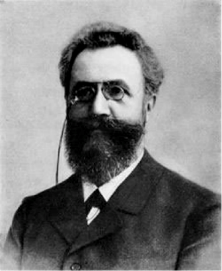
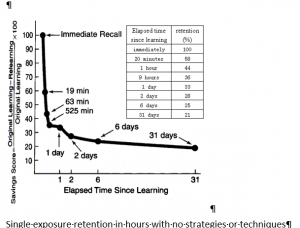
 Why you need this: It’s an important but easy-to-use classroom teaching tool to encourage the retrieval of information.
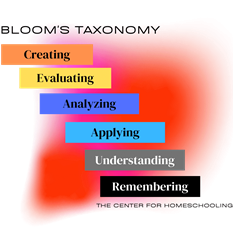 Why you need this: This will help you teach to a deeper level of understanding. It provides a discipline for reviewing and improving your instructional plans.